

The problem with cookie analytics
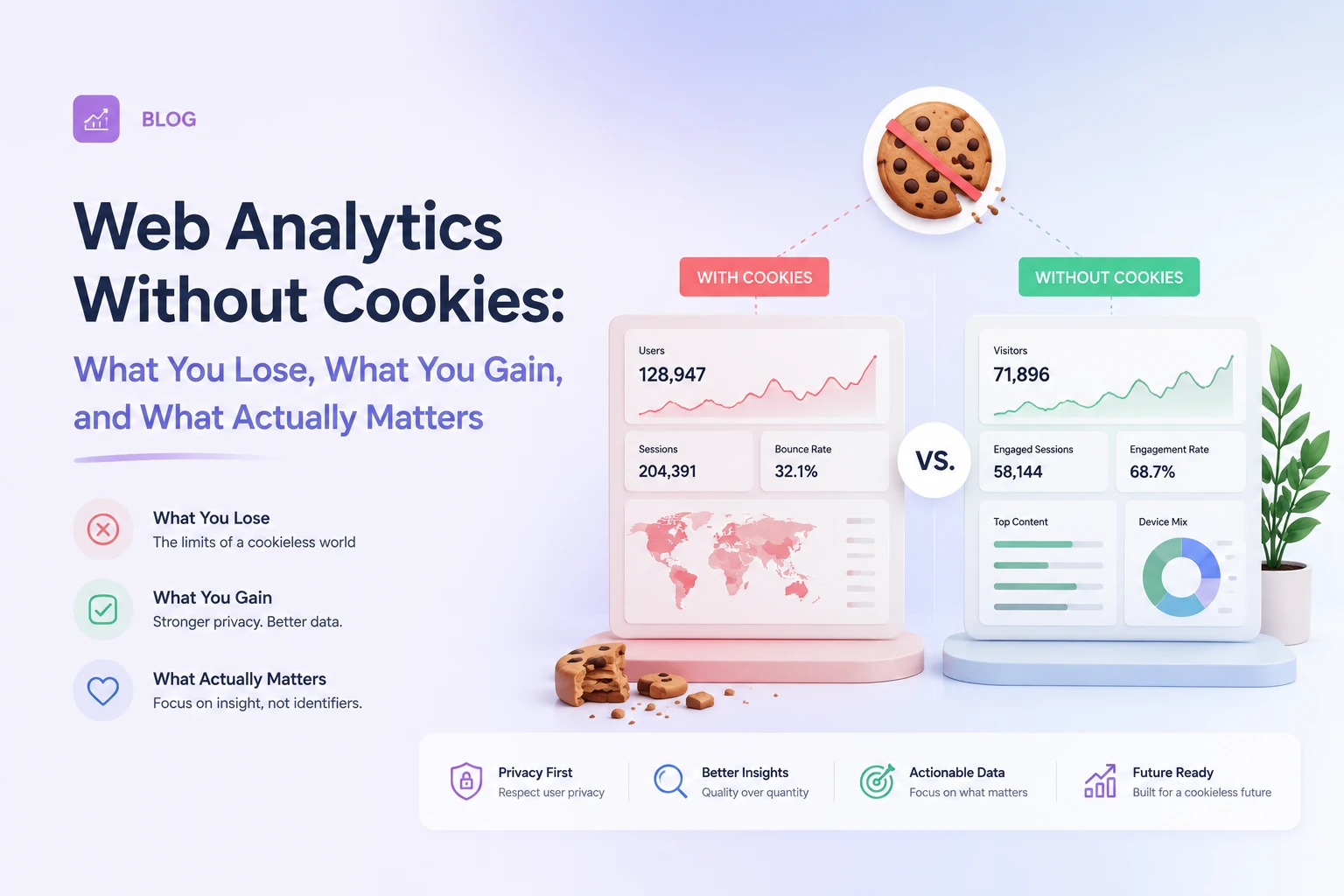
The problem with traditional cookie-based analytics is measurement quality. When your analytics platform requires user consent and a significant portion of users decline, you are measuring a self-selected subset and treating it as representative of the whole.
What you lose
Cross-session user tracking — the ability to follow a specific user across multiple visits — is the capability you lose most significantly. You also lose the ability to do cross-site tracking for ad attribution purposes.
“The capabilities you lose are real but narrower than most people assume. For understanding how your site is performing, cookieless analytics is often more complete.”
What you gain
The primary gain is data completeness. Cookieless analytics works by measuring requests at the server or edge level without placing tracking identifiers on the user's device. The result: you are measuring all your traffic, not just the subset that opted in.
The metrics that matter
The web metrics that actually drive decisions: traffic sources, page performance, conversion rates by source and page, and trend data over time. Most businesses could operate effectively with just these four dimensions.
Making the switch
Run both platforms in parallel for 4–6 weeks to understand the discrepancies in your specific context, and document which historical data you need to preserve before you turn off the old platform.
Enjoyed this article?
Get new articles, product updates and insights from Muqira in your inbox.
Found this useful? Share it.