

The size question
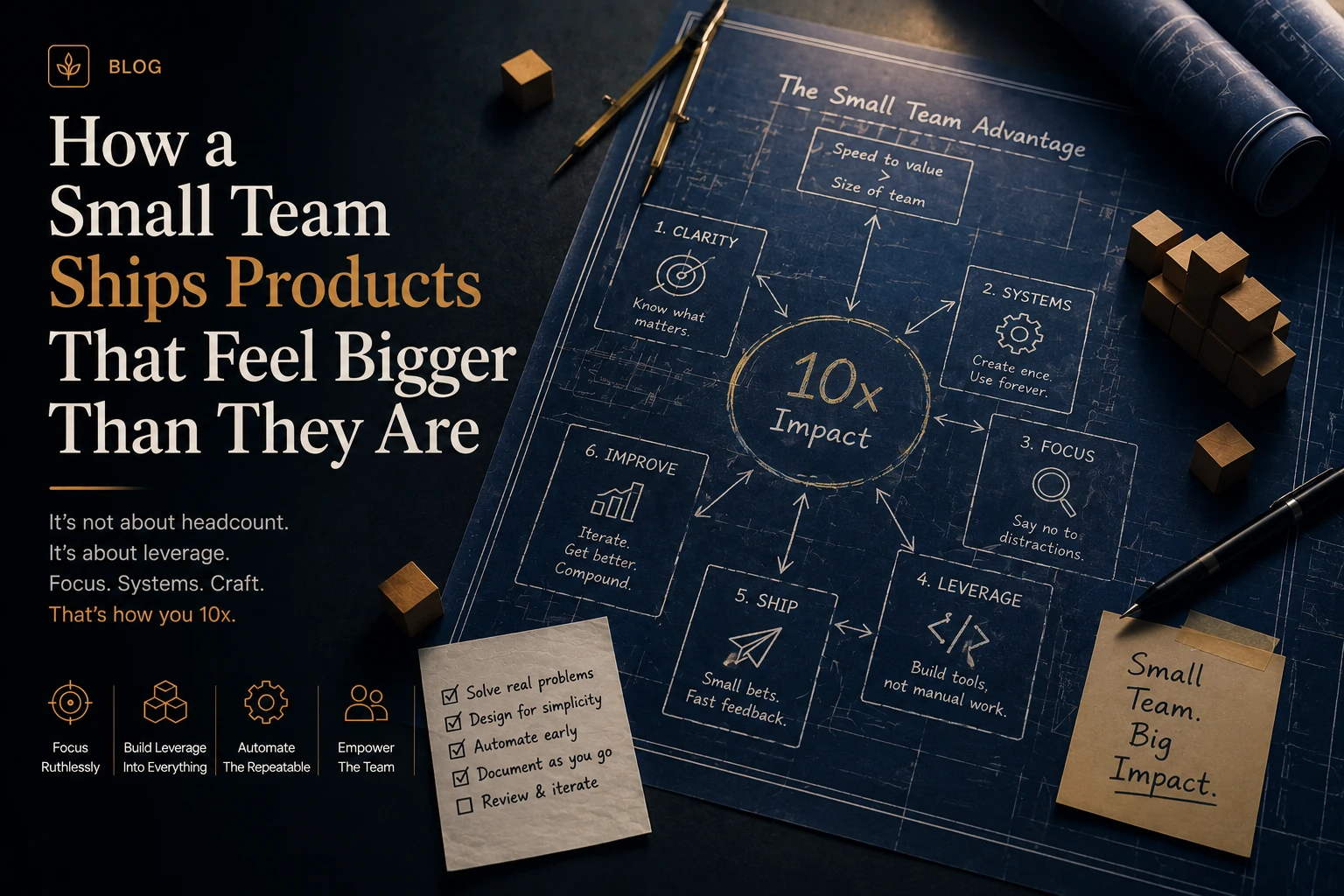
People who know us sometimes express surprise when they see the breadth of what we've built. Multiple live products, a library of free tools, a design system, this blog — the assumption is that it must come from a larger team than it does.
Ruthless prioritisation
The primary mechanism that lets a small team punch above its weight is saying no to the right things. Our prioritisation question: if we do this and nothing else this week, will the product be meaningfully better for the users who matter most to us?
Design does heavy lifting
“A well-designed product with ten features feels more complete than a poorly designed product with fifty. Design is not decoration — it is leverage.”
Design quality is the multiplier. A small team that invests seriously in design can produce something that feels larger, more considered, and more trustworthy than a larger team that doesn't.
Systems over heroics
A small team that relies on individual effort for everything that matters is a fragile team. Build systems — processes, automations, and structures that run reliably without requiring someone to be watching.
Saying no, loudly
One of the harder skills in a small team is saying no to users — specifically, to feature requests from users you like and respect. A small team that says yes to every feature request ends up building a product that is everything to a few people and nothing to anyone else.
What we genuinely can't do
There are things a small team genuinely cannot do: compete in markets where distribution requires massive sales teams, support enterprise contracts with complex compliance requirements, or ship features at the speed a well-funded competitor with fifty engineers can maintain.
Enjoyed this article?
Get new articles, product updates and insights from Muqira in your inbox.
Found this useful? Share it.