
The expensive lesson
We have rebuilt three products from scratch. Not refactored — rebuilt. Complete rewrites that took months, delayed other work, and forced us to delay features we'd promised users. In each case, the root cause was the same: a technology choice early on that felt exciting at the time, and cost more to work with than it saved.
What actually matters early
In the early life of a product, the only metric that matters for your tech stack is: how fast can your team ship and iterate? Not theoretical performance. Not scalability. How fast can you move today?
The case for boring
“Boring technology has a superpower: it has already encountered, and solved, most of the problems you are about to encounter.”
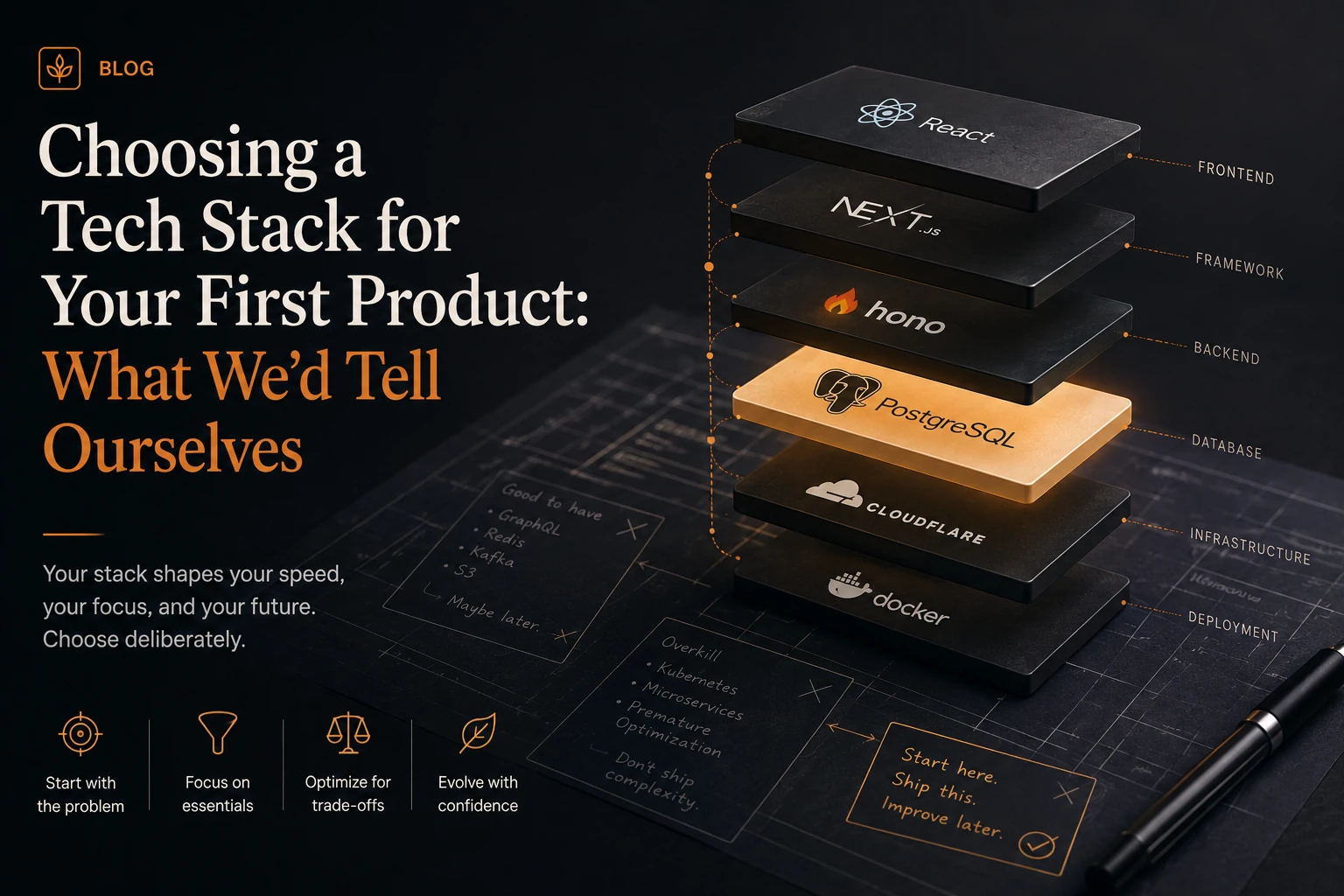
When we say boring, we mean: technologies that have been in production at scale for years, have large communities, and generate Stack Overflow answers for most of the problems you'll encounter. Postgres. React. Node or Python or Ruby or Go.
Database decisions
Choose your database more carefully than anything else, because it's the hardest thing to change later. Your frontend can be rewritten in a week. A database migration on a live system with years of accumulated data is a six-month project.
When to break the rules
Some products have genuinely unusual requirements that justify unusual technology choices. Real-time collaboration at scale, heavy media processing, global low-latency — these exceptions exist. The mistake is applying exception-case reasoning to problems that don't have exception-case requirements.
The real bottleneck
The bottleneck in early-stage product development is almost never the technology. It's the clarity of what to build next, the speed of getting user feedback, and the discipline to act on that feedback rather than on your own preferences.
Enjoyed this article?
Get new articles, product updates and insights from Muqira in your inbox.
Found this useful? Share it.